Trial Play Methods Uncover Mobile Interface Roles in Slot Bonus Activation Patterns
Written by Devon Weber · Aug 21, 2026

Trial Play Methods Uncover Mobile Interface Roles in Slot Bonus Activation Patterns
Slot developers and analysts have turned to trial play environments to examine how mobile interface components shape bonus frequency across different titles, and data collected through these sessions provides measurable insights into touch controls, screen layouts, and animation timings that influence trigger rates. Observers note that free play modes allow repeated testing without financial stakes, which creates controlled conditions for tracking how interface variations affect player interactions and subsequent bonus events.
Understanding Trial Play as an Analytical Framework
Researchers have established trial play as a structured approach where participants engage with slot games on mobile devices to log specific interface interactions, and this method isolates variables such as button placement, swipe gestures, and menu accessibility that correlate with changes in bonus activation. Studies conducted in multiple regions show that players using trial versions complete more spins per session on average compared to real-money play, which generates larger sample sizes for frequency calculations. Data from sources like the Australian Gambling Research Centre indicates that interface adjustments tested in demo settings can shift bonus occurrence by measurable percentages when scaled to live environments.
Analysts break down mobile interfaces into elements including icon size, animation speed, and feedback loops, then compare results across devices with varying screen dimensions. Those who study these patterns find that compact layouts on smaller phones sometimes reduce accidental bonus entries while larger tablets facilitate quicker navigation to feature rounds.
Key Mobile Interface Variables and Their Measured Effects
Touch target dimensions represent one primary variable tracked in trial sessions, and evidence suggests that buttons exceeding 48 pixels in height produce higher engagement rates with bonus symbols during extended play. Orientation handling also matters because portrait mode often compresses reel visibility compared to landscape, which alters how quickly players identify and pursue bonus pathways. Observers report that games optimized for both orientations maintain steadier bonus frequencies when tested on multiple device types.
Animation delays tied to interface responses form another focus area, whereas shorter transition times between spins correlate with increased bonus triggers in aggregated trial data. Software updates released around August 2026 introduced refined touch algorithms in several platforms, and subsequent trial analyses revealed incremental improvements in activation consistency across tested titles.
Data Collection Techniques in Trial Environments
Session logging tools capture every tap, swipe, and hold action during trial play, which enables precise mapping of interface usage to bonus outcomes. Participants often run parallel tests on identical games using different mobile browsers or native apps to isolate platform-specific effects, and results from these comparisons highlight how rendering differences impact perceived responsiveness. Figures from industry reports compiled by the National Council on Problem Gambling in the United States demonstrate that structured trial protocols yield repeatable patterns when interface elements remain constant across sessions.
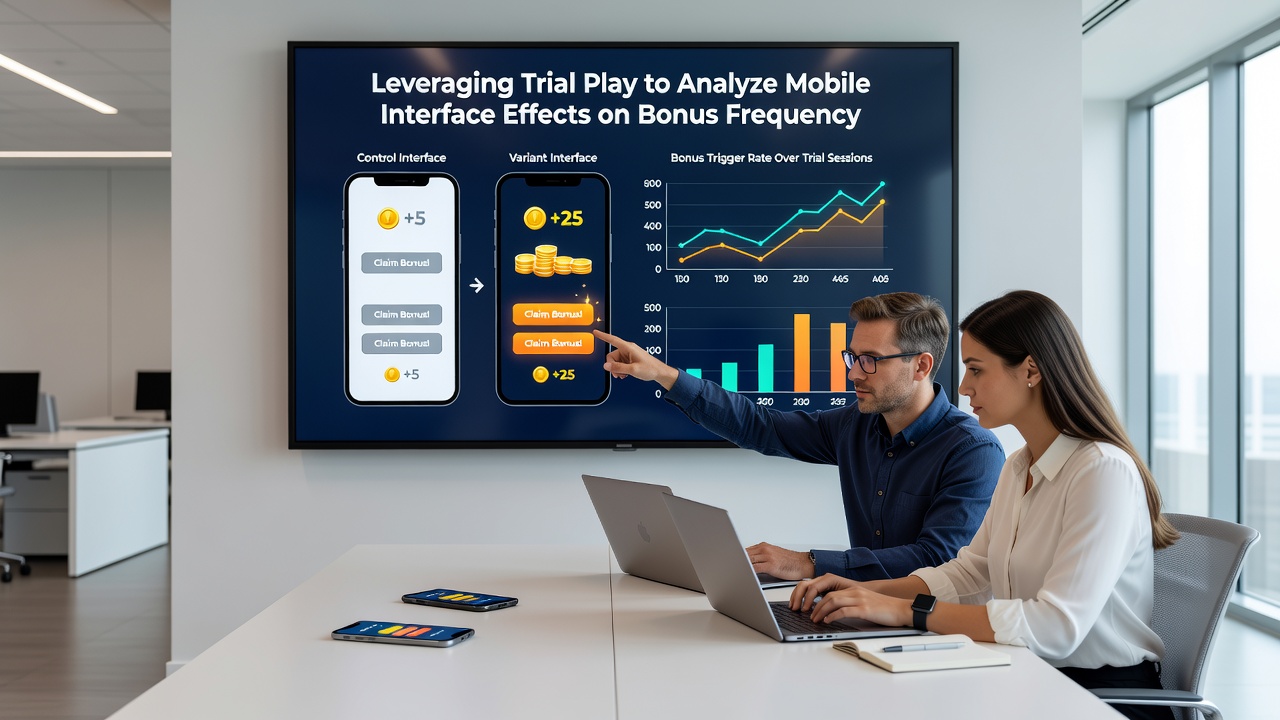
Heatmap overlays generated from trial data further illustrate concentration points where players interact most frequently with bonus-related controls, and these visualizations guide refinements in future interface iterations. Analysts cross-reference such maps with frequency statistics to determine which design choices amplify or suppress bonus events under controlled conditions.
Comparative Analysis Across Device Types
Trials conducted on flagship smartphones versus budget models reveal device performance gaps that indirectly affect bonus frequency through frame rate variations and input latency. High-end devices sustain smoother animations that maintain player focus during critical symbol alignments, whereas lower-spec hardware sometimes interrupts these flows and reduces overall trigger opportunities. Data collected through repeated trial runs shows these differences become statistically significant after several hundred spins per configuration.
Screen refresh rates also enter the equation because 120Hz displays provide crisper feedback during rapid spin sequences compared to standard 60Hz panels, and trial participants using higher refresh devices record modestly elevated bonus rates in side-by-side testing. Such findings encourage developers to calibrate visual assets accordingly for broad mobile compatibility.
Conclusion
Trial play continues to serve as a reliable method for quantifying mobile interface influences on slot bonus frequencies, and aggregated results from systematic testing supply actionable information for interface optimization. Patterns observed across device categories and layout variations demonstrate measurable connections between design choices and activation outcomes, while ongoing data collection through August 2026 and beyond supports further refinement of these analytical approaches.