Charting Volatility Variations in BGaming Touch Slots Using Platform Demo Metrics from the UK
Written by Willa Schmid · Aug 26, 2026

Charting Volatility Variations in BGaming Touch Slots Using Platform Demo Metrics from the UK
Demo data collected from UK platforms offers a clear window into volatility patterns within BGaming's touch-optimized games, and researchers have tracked these shifts across multiple titles throughout 2026. Observers note that touch-friendly mechanics, including swipe controls and adaptive reel speeds, interact directly with payout structures, which produces measurable changes in risk distribution during extended play sessions. Data sets compiled through August 2026 reveal consistent fluctuations in hit frequency and bonus trigger rates that align with specific user interface adjustments.
Core Elements of Volatility Tracking
Volatility in slot mechanics reflects the balance between frequent small returns and infrequent larger payouts, and analysts map these traits by logging thousands of demo spins on UK-hosted platforms. BGaming titles designed for mobile first incorporate gesture-based inputs that alter reel timing, and this feature influences how variance manifests in real time. Studies compiled by industry groups show that touch responsiveness can compress or expand the spread of outcomes within a single session, which creates layered volatility profiles not always visible in desktop versions.
Researchers apply statistical models to demo logs that capture base game returns, bonus round frequencies, and feature activation sequences. These models isolate the impact of touch-specific elements such as auto-spin thresholds and haptic feedback loops. Evidence from aggregated UK platform records indicates that certain BGaming releases exhibit mid-session volatility spikes when players engage multi-touch zoom functions during feature selection screens.
Data Sources and Collection Methods
UK demo environments provide standardized access to free-play modes that mirror live conditions without financial stakes, and this setup allows systematic recording of outcome sequences. Data aggregators compile results across hundreds of titles, focusing on metrics such as standard deviation of returns and distribution of win clusters. Reports from the New Jersey Division of Gaming Enforcement highlight parallel approaches used in regulated markets, where demo analytics inform broader risk assessments for mobile content.
Collection protocols emphasize repeated trials under controlled touch input conditions, and analysts cross-reference these against static reel mathematics supplied by developers. One study revealed that gesture speed variations in BGaming games correlate with altered scatter symbol landing rates, which shifts perceived volatility without changing the underlying probability tables. Platforms record these inputs at millisecond resolution to build granular heat maps of risk exposure over time.
Observed Patterns in Specific Titles
Analysis of several BGaming releases shows distinct volatility tiers that emerge when players switch between portrait and landscape orientations on UK demo sites. Titles with stacked wild mechanics display tighter outcome clusters during touch-driven rapid spins, whereas games featuring expanding symbols spread returns more widely across longer sequences. Demo data logs from August 2026 capture these transitions through cumulative distribution curves that track deviation from mean returns.
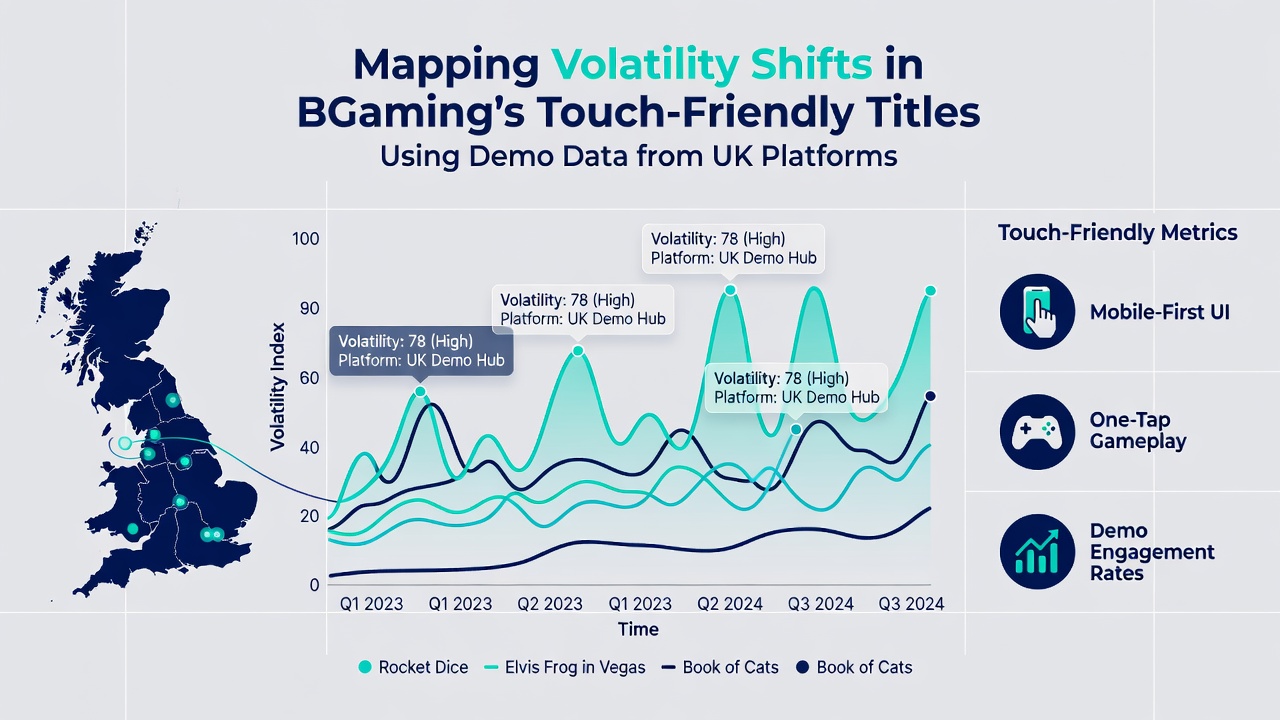
Additional findings point to bonus buy options that recalibrate volatility when accessed via touch interfaces, and data sets indicate higher activation rates during one-handed play sessions common on mobile devices. Observers note that feature retrigger frequencies fluctuate based on swipe gesture consistency, which introduces an additional variable into traditional volatility calculations. Aggregated figures reveal that mid-volatility titles often drift toward higher variance categories under sustained touch input compared with mouse-driven equivalents.
Comparative Analysis Across Regions
UK platform metrics align with findings from other jurisdictions when similar demo methodologies are applied, and data shared through the Australian Communications and Media Authority demonstrates comparable touch-interface effects on variance in mobile-optimized content. Analysts compare UK demo logs against international samples to isolate platform-specific variables such as latency and input calibration. These cross-regional comparisons confirm that volatility mapping remains consistent when touch mechanics receive equivalent testing conditions.
Academic papers on digital interface design further support the observation that haptic and gesture elements modify player pacing, which in turn affects realized volatility during play. UK demo repositories supply the volume of trials needed to detect subtle shifts that smaller data pools might miss, and researchers continue to refine mapping algorithms to account for these interface-driven influences.
Conclusion
Demo data from UK platforms continues to supply detailed records that support volatility mapping for BGaming's touch-friendly titles, and ongoing collection through 2026 refines the precision of these models. Patterns identified in hit rates, bonus structures, and orientation changes provide objective benchmarks for understanding risk layers in mobile slot design. Further aggregation of such data sets will likely enhance comparative studies across additional markets and interface types.